

How to design an aluminum formwork system for hotels?
Leave a message

Designing an aluminum formwork system for hotels is a complex yet rewarding process. As a supplier of Aluminum Formwork System Design, I've had the privilege of being involved in numerous hotel projects. In this blog, I'll share some insights on how to design an effective aluminum formwork system for hotels.
Understanding the Hotel Project
Before diving into the design, it's crucial to understand the unique requirements of the hotel project. Hotels come in all shapes and sizes, from small boutique hotels to large luxury resorts. Each type has its own architectural features, room layouts, and construction schedules.
First, take a close look at the architectural drawings. Identify the key structural elements, such as columns, beams, and slabs. Note the dimensions, shapes, and positions of these elements. For example, in a high - rise hotel, the core structure with elevator shafts and stairwells will require special attention. The formwork for these areas needs to be designed to ensure precise construction and easy installation.
Also, consider the room layouts. Hotels typically have a large number of standardized rooms. Designing formwork that can be reused across multiple rooms can significantly reduce costs. For instance, if most of the guest rooms have a similar size and shape, you can design a set of standard formwork panels that can be used repeatedly.
Material Selection
When it comes to aluminum formwork, the choice of materials is vital. Aluminum is preferred for its lightweight nature, high strength - to - weight ratio, and corrosion resistance. However, not all aluminum alloys are created equal.
For hotel projects, we usually recommend using high - quality 6061 or 6082 aluminum alloys. These alloys offer excellent mechanical properties and can withstand the rigors of construction. They are also relatively easy to machine and weld, which is important for custom - made formwork components.
The thickness of the aluminum panels is another important factor. Thicker panels are more rigid and can support greater loads, but they also add weight. For most hotel construction, panels with a thickness of 4 - 6 mm are commonly used. This provides a good balance between strength and weight.
Designing Standard Panels
Standard panels are the building blocks of an aluminum formwork system. They are designed to be modular and easy to assemble. A well - designed standard panel can simplify the construction process and improve efficiency.
The most common width for standard panels is 600 mm. You can find more information about Aluminum Formwork Standard Panel 600 Width. This width is a good compromise between handling ease and coverage area. Panels can be connected together using various methods, such as pins and wedges or clamps.
When designing standard panels, consider the following:
- Reusability: As mentioned earlier, the ability to reuse panels across different parts of the hotel is essential. Design panels in a way that they can be easily adjusted and reconfigured.
- Ease of Installation: The panels should be designed to be installed quickly and easily. This reduces labor costs and construction time. For example, adding handles or lifting points to the panels can make them easier to move and position.
- Accuracy: Precise dimensions are crucial for a successful formwork system. Any deviation in panel size can lead to problems during construction, such as gaps between panels or misaligned structures.
Specialized Formwork for Hotel Features
Hotels often have unique features that require specialized formwork. For example, swimming pools, atriums, and curved walls need custom - designed formwork.
For swimming pools, the formwork needs to be watertight and able to withstand the hydrostatic pressure of the water. It should also be designed to create a smooth finish on the pool walls and floor. You can use Aluminium Wall Formwork 600 C Panel as a base and modify it to fit the specific shape and size of the pool.
Atriums are large, open - space areas in hotels. The formwork for atriums needs to be designed to support the large spans and high ceilings. Specialized trusses or scaffolding may be required to provide additional support.
Curved walls add a touch of elegance to hotels but are more challenging to form. You can use flexible aluminum panels or create custom - made curved formwork segments. These segments can be pre - fabricated off - site and then assembled on - site.
Integration with Other Construction Systems
An aluminum formwork system doesn't work in isolation. It needs to be integrated with other construction systems, such as reinforcement, concrete pouring, and scaffolding.
When designing the formwork, consider how the reinforcement bars will be placed. The formwork should have openings or channels for the bars to pass through. This ensures that the reinforcement is properly installed and that the concrete structure has the required strength.
Concrete pouring is another critical aspect. The formwork should be designed to allow for easy and uniform pouring of concrete. It should also be able to withstand the pressure of the wet concrete without deforming.
Scaffolding is used to provide access to the formwork during installation and removal. The formwork system should be designed to be compatible with the scaffolding system. For example, there should be provisions for attaching the scaffolding to the formwork safely.
Design for Efficiency and Safety
Efficiency and safety are two of the most important considerations in formwork design.
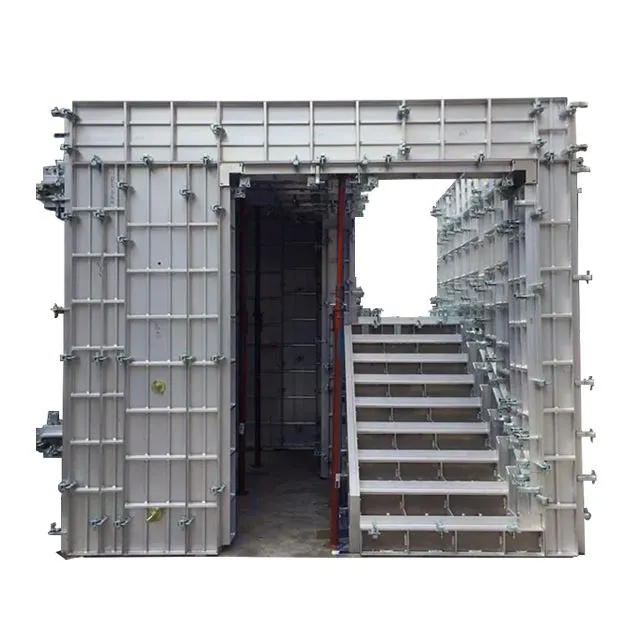

To improve efficiency, design the formwork system to be easy to assemble and disassemble. Use simple connection methods and minimize the number of parts. This reduces the time and labor required for construction.
Safety is non - negotiable. The formwork should be designed to meet all relevant safety standards. This includes providing guardrails, non - slip surfaces, and proper anchoring points. Workers should be able to work on and around the formwork without fear of accidents.
Cost - Effectiveness
Cost is always a major concern in any construction project. Designing a cost - effective aluminum formwork system for hotels involves several strategies.
As mentioned earlier, reusing standard panels can save a significant amount of money. Additionally, minimizing the amount of custom - made formwork can also reduce costs. However, don't sacrifice quality for cost. A well - designed formwork system may have a higher upfront cost but can save money in the long run through increased efficiency and reduced waste.
Customization for Different Hotel Types
Different types of hotels may require different formwork designs. For example, a budget hotel may focus more on cost - effectiveness and simplicity, while a luxury hotel may demand more elaborate and high - quality formwork.
Budget hotels usually have a more standardized design, so the formwork can be designed to be as modular and reusable as possible. Luxury hotels, on the other hand, may have more complex architectural features, such as elaborate facades and unique interior spaces. In these cases, the formwork may need to be more customized to achieve the desired aesthetic.
Sustainability
In today's construction industry, sustainability is becoming increasingly important. Aluminum formwork is already a sustainable choice compared to traditional formwork materials like wood. Aluminum is recyclable, and using aluminum formwork can reduce the demand for timber.
When designing the formwork system, consider ways to further improve its sustainability. For example, you can design the system to be more energy - efficient during production and use. Also, look for ways to reduce waste during the construction process.
Conclusion
Designing an aluminum formwork system for hotels is a multi - faceted process that requires careful planning, attention to detail, and a good understanding of the project requirements. By following the principles outlined in this blog, you can create a formwork system that is efficient, cost - effective, and safe.
If you're involved in a hotel construction project and are looking for an aluminum formwork system design, I'd love to talk to you. We have the expertise and experience to design a custom - made solution that meets your specific needs. Whether you need formwork for a small boutique hotel or a large luxury resort, we've got you covered.
References
- Construction Management Handbook
- Aluminum Alloys in Construction: Properties and Applications
- Best Practices in Formwork Design for High - Rise Buildings


